.png)
Learning that begins within.
.png)
AARAU REGION
.png)
.jpeg)
MONTESSORI SCHOOL
.png)
.png)
PER GROUP
An approach that truly respects the child.
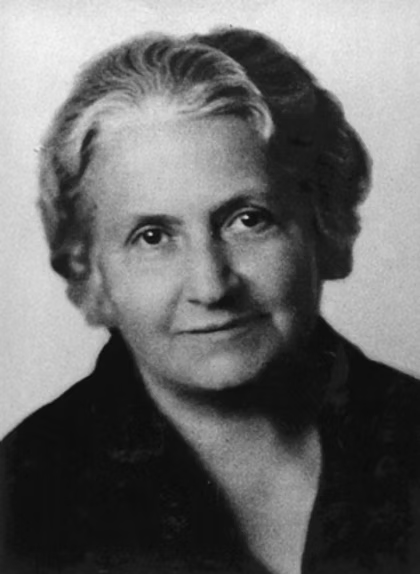
Maria Montessori was a doctor, mathematician and educator. The approach she developed at the beginning of the 20th century is now used in more than 20,000 schools worldwide — and remains just as relevant today.
At its heart is a simple belief: children are not empty vessels waiting to be filled. They have a natural drive to learn. Our role is not to hold back that drive, but to guide and support it.


Independance
Children learn by doing things for themselves — not through explanations alone. Each activity is designed so that children can complete it independently.
.svg)
Intrinsic Motivation
No grades, no rewards. Children act out of genuine interest, creating lasting engagement rather than short-term achievement.
.svg)
The Prepared Environment
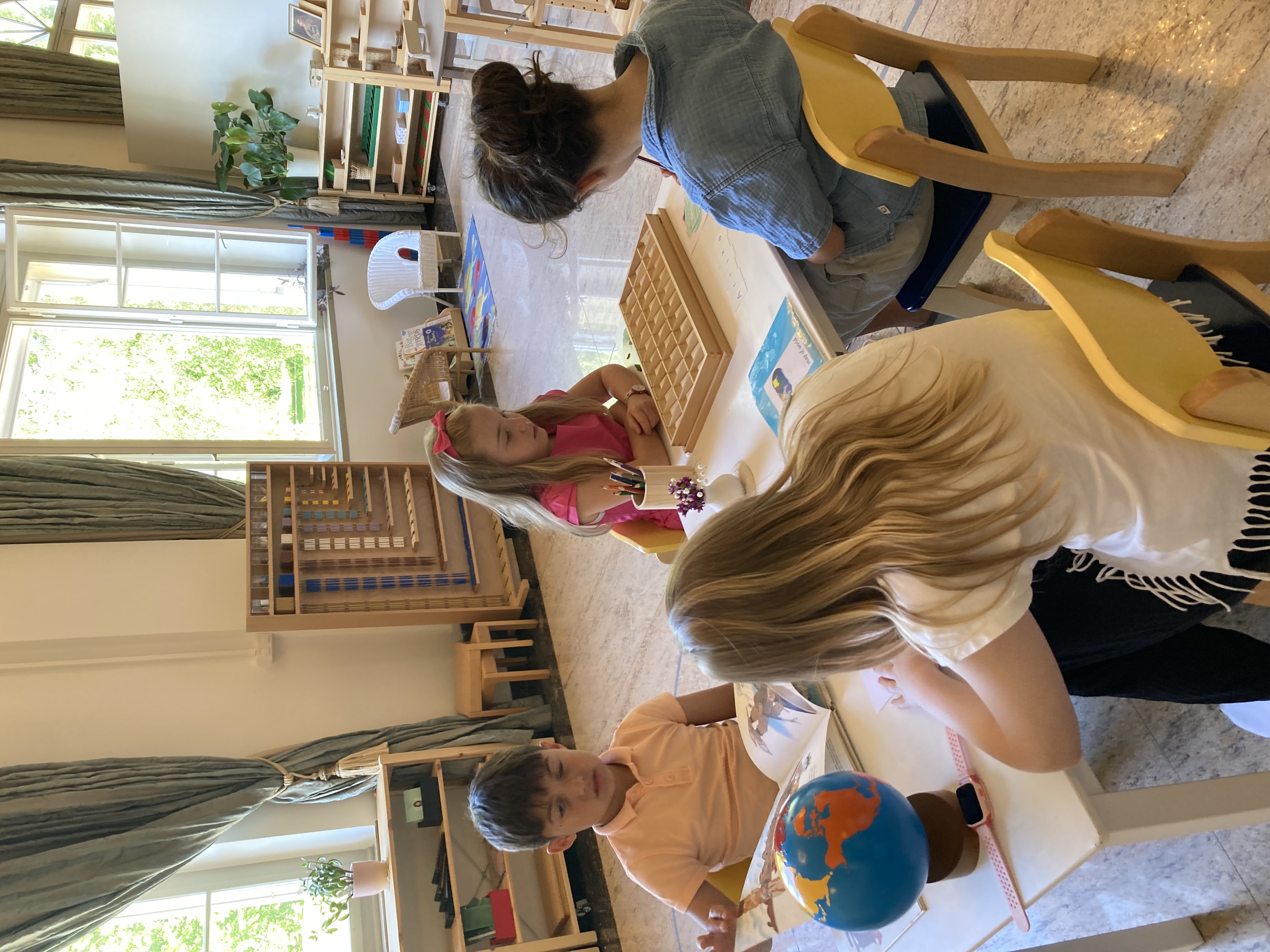
The space is not a classroom in the traditional sense. Everything is within reach, carefully organised and inviting.
.svg)
Observation rather than direction
The educator steps in only when necessary. Observation comes first, allowing them to understand what each child truly needs.
Maria Montessori
Her approach is based on observing each child’s development and providing specially designed learning materials that encourage independent learning. Today, Montessori education is practised successfully in schools and early years settings around the world.
The Four Stages of Development in Montessori Education
The absorbent mind

Der forschende Geist
Identität und Zugehörigkeit
Selbstständigkeit und Verantwortung
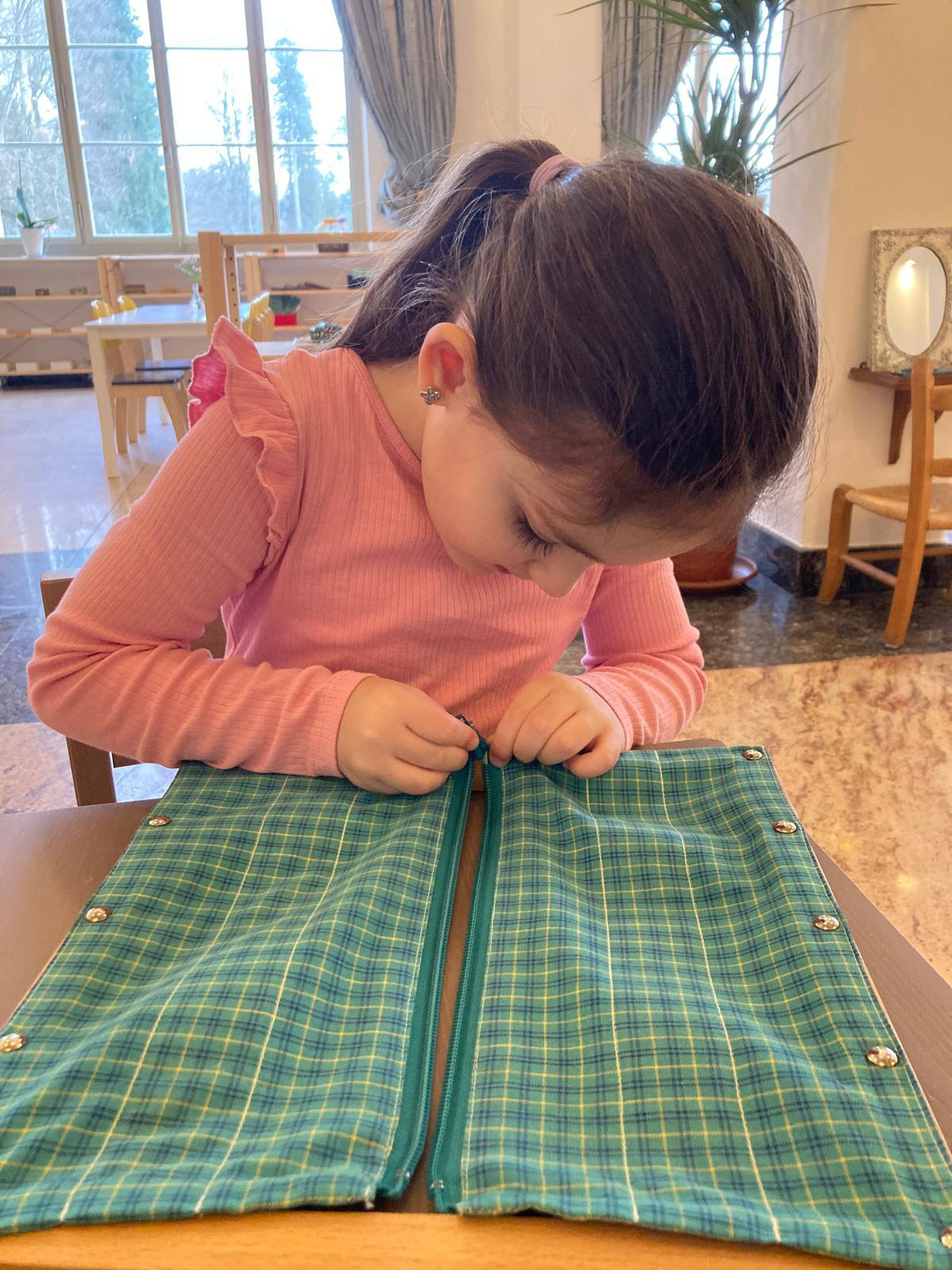
Learning by Doing.
Montessori materials are neither toys nor conventional classroom resources. They are educational tools rooted in an understanding of child development.
Tangible & concrete
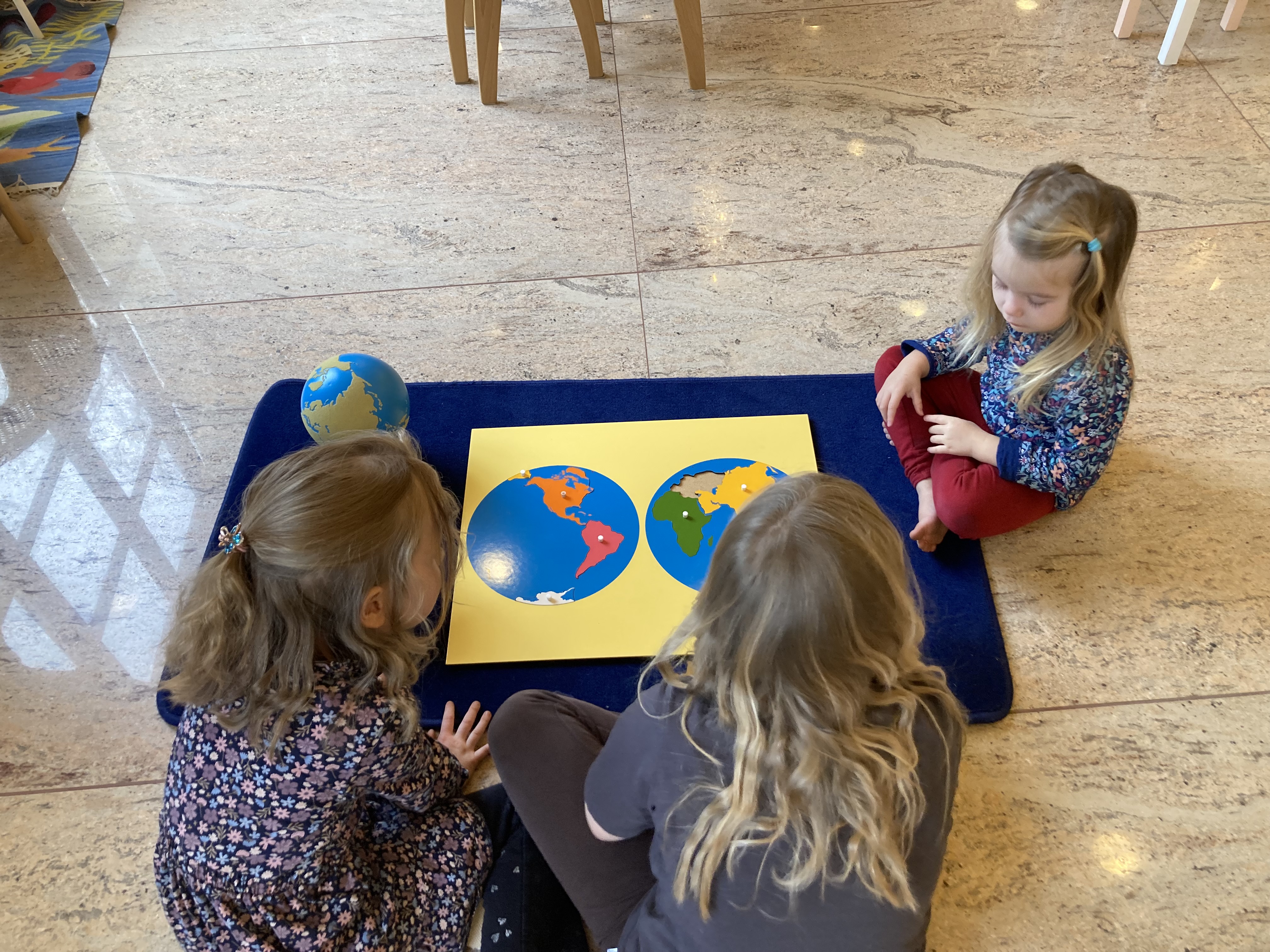
Children understand the world through images and hands-on experience, rather than words alone. Montessori materials make abstract concepts such as numbers, language and geometry tangible. First, children explore with their hands; then, understanding follows.
Self-correction
Each material includes a built-in control of error. Children can recognise for themselves when something is not quite right, without the educator needing to intervene. This develops perseverance rather than dependence.
Boost concentration
When a child becomes completely absorbed in an activity, Montessori described this as the “polarisation of attention”. This state of deep concentration is not accidental — it is a key aim of the approach.
From simple to complex
The materials follow a carefully structured progression. Each new concept builds on what came before, allowing every child to develop at their own pace.
What truly sets Montessori apart.
What Parents Really Want To Know.
Is my child ready to transition after Montessori primary school?
Yes. Montessori education also ensures that children acquire the academic, social, and personal skills they need for their future education. They learn to work independently, take responsibility, and understand complex connections. Each child's individual progress is carefully monitored to ensure they are well-prepared for a potential transition to a public school.
What happens if my child simply does not want to do any work?
Montessori does not mean that children are left to make every decision themselves or do nothing. Our educators observe carefully to understand why a child may be finding it difficult to engage in an activity, then offer thoughtful encouragement, guidance and appropriate materials. The aim is to nurture motivation through interest, positive relationships and suitable learning opportunities, rather than pressure.
Is Montessori also suitable for children with special needs?
Montessori can be a great fit for many children with diverse needs because the learning pace, materials, and guidance can be individually tailored. However, the child's specific situation is always the deciding factor. In a personal consultation, we will work together to determine what support is needed and whether our program is the right match.
Are there clear structures, or is everything open?
There are clear structures, established routines, and binding rules. Within this framework, children are given choices, such as the order in which they complete their tasks or the selection of appropriate materials. In the Montessori approach, freedom does not mean arbitrariness; rather, it means acting independently within reliable boundaries.
How can I track my progress without grades?
Progress is made visible through continuous observation, documentation of learning levels, discussions, and concrete work results. This is not just about right or wrong, but also about independence, concentration, perseverance, and the individual learning path. Parents receive regular feedback on their child's development.
My child is very active; will they fit into this quiet environment?
Yes, active children can also thrive in a Montessori environment. Movement is a natural part of learning and is not fundamentally restricted. However, the prepared environment helps children learn to channel their energy more purposefully, take on responsibility, and develop longer periods of concentration.
How are social skills fostered in Montessori education?
In mixed-age groups, children learn to be considerate, offer help, take responsibility, and resolve conflicts respectfully. Older children support the younger ones, while the younger ones learn from the older ones. Community, collaboration, and mutual appreciation are integral parts of everyday life.
Experience Montessori at the Ballyhouse
Oct 24, 2026
10.00 am–2.00 pm — Open Day
Schönenwerd
.png)
.png)
.png)