.png)
AMI 3–6 Diploma Course starts 08.01.2027
The internationally recognised Montessori Kindergarten training programme — the only one in Switzerland delivered through in-person teaching. Those who earn their diploma with us receive the same qualification as graduates in Amsterdam, New York or Sydney and can work in Montessori institutions worldwide.
Information Evenings:
31 August 2026, 5 October 2026, 12 November 2026
7:30 p.m. / Online via Zoom

AMI 3–6 Diploma Course
This course enables participants to work in a Montessori Children’s House / kindergarten and to support children’s development in a professional and age-appropriate way.
The AMI 3–6 Diploma Course is delivered 95% in person at the Ballyhouse. It is designed to be completed alongside employment, with short modules generally taking place every other Friday and Saturday, as well as during selected weeks of the school holidays. This allows participants to combine the training with their work in a Children’s House or other professional commitments. The programme combines a strong academic foundation with extensive practical experience.
Fourteen Core Subjects, One Diploma
Who is it for?
This course is suitable for:
.svg)
Preschool Teachers
Childcare centre staff
Qualified childcare professionals (FaBe)
People working in Montessori settings without a diploma
Career changers looking for a new professional direction
People who speak only English and are seeking employment at a bilingual institution in Switzerland
Why in-person learning? Benefits for participants
The in-person course combines well-founded with practical experience, personal guidance and collaborative learning on site.
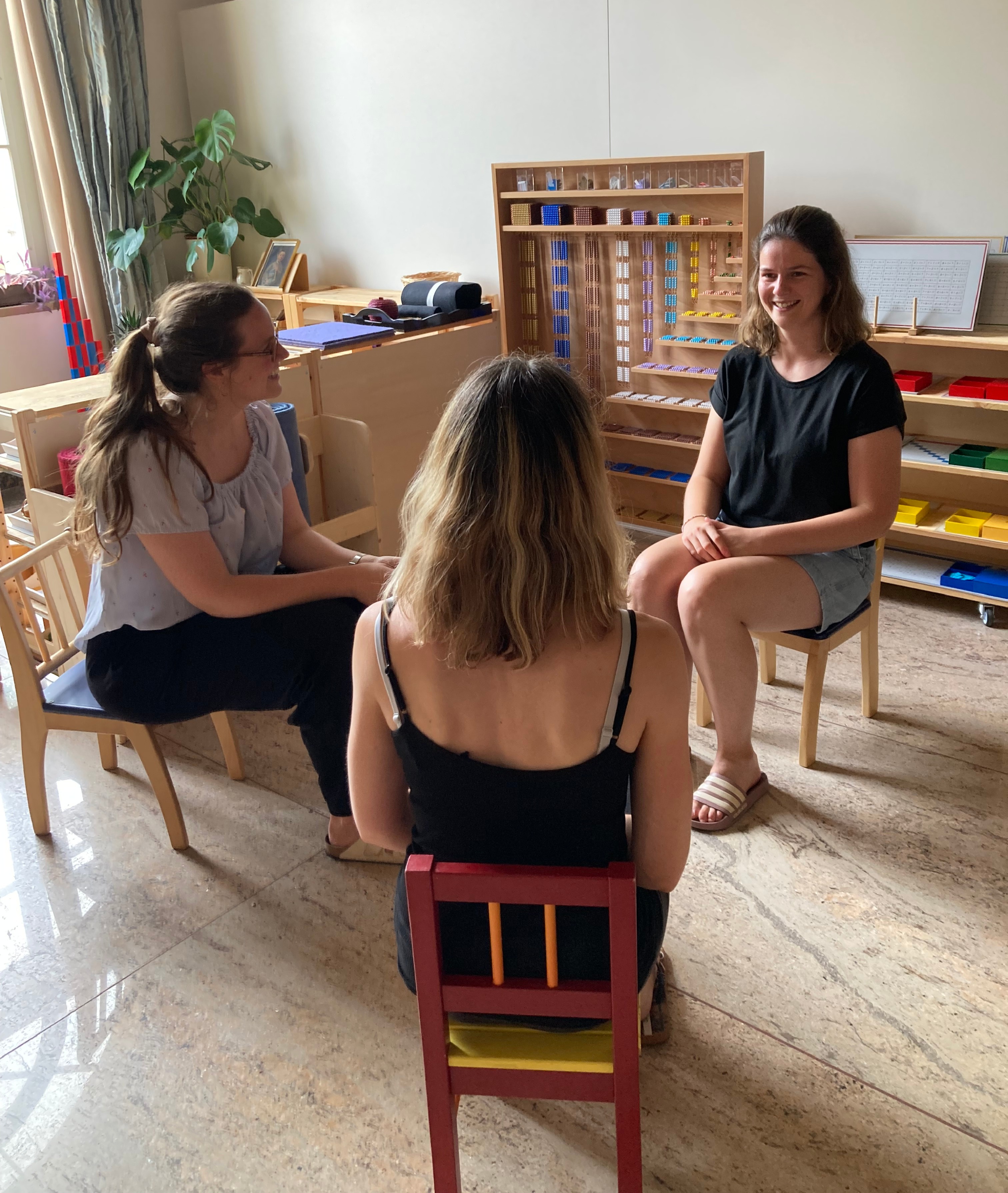
Learning with and from one another, observing each other and exchanging feedback make the learning process both more effective and more enjoyable.
Through consistent, repeated work with the Montessori materials, you will become thoroughly familiar with them. You will be observed, guided and corrected where necessary, enabling you to apply and consolidate your theoretical knowledge in practice.
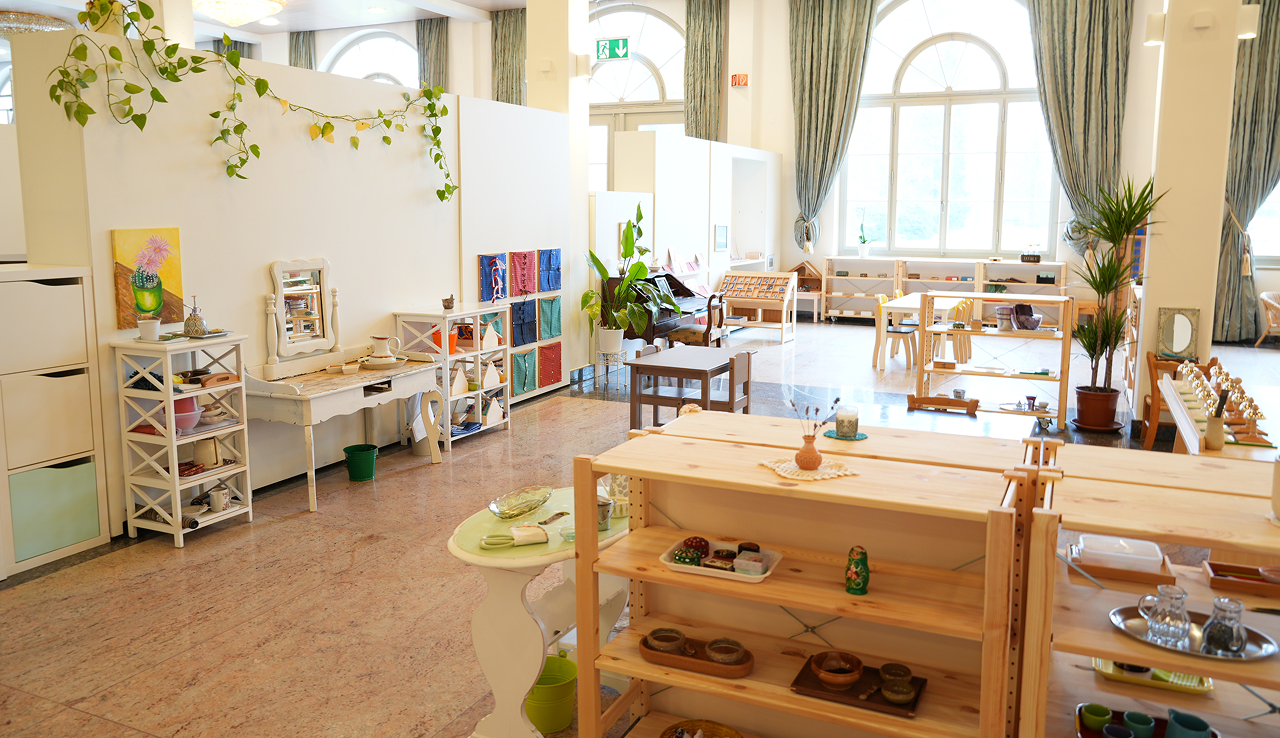
You will have plenty of time to familiarise yourself with the prepared environment, allowing you to work within it with confidence and assurance.
Questions and uncertainties can be discussed in person and clarified through practical situations in the Children’s House.
The course instructor’s close observation ensures that any misunderstandings or uncertainties are identified and addressed immediately — something that is much more difficult to achieve through online learning.
Conversations during breaks, lasting friendships and opportunities to build professional networks foster team spirit, social skills and resilience.
This practical training can open up opportunities in the job market and may be a deciding factor for your future employer.
Participants develop a network of personal relationships that can last a lifetime.
The in-person teaching model is recognised by AMI and has been successfully implemented worldwide for decades.
In recent years, I have successfully delivered this course in person in Switzerland. Recently, AMI Courses have also been offered in an online / blended format.
For many reasons, I am not convinced by this new online approach (see the benefits outlined above). Therefore, from 2027 onwards, I will continue to deliver the proven in-person course format.
“What you tell me, I forget. What you show me, I remember. What you let me do, I understand.”
— Confucius
Benefits of the Biloba Training Format for Institutions
Students who complete this course receive practical, hands-on training.
With several groups of children of different ages located in the same building, course participants gain valuable insight into working with a range of age groups.
The course schedule has been specifically designed around the needs of Montessori schools. As sessions take place on Fridays and Saturdays, as well as during school holidays, staff need to spend less time away from their regular roles.
95% in person at the Montessori Biloba Academy, Parkstrasse 36, 5012 Schönenwerd / 5% online (theory lectures).
German with English translation.
Montessori Reading Materials
Recommended reading in preparation for the course:
M. Montessori, The secret of childhood, dtv/Klett-Cotta
M. Montessori, The absorbent Mind, Herder
Co-founded by Maria Montessori herself in 1929, the Association Montessori Internationale continues to award the world’s original and most rigorous Montessori qualification.
.png)
What Participants Say
Personal experiences from those who completed the in-person course with Mariza Hefty.
.png)
.png)